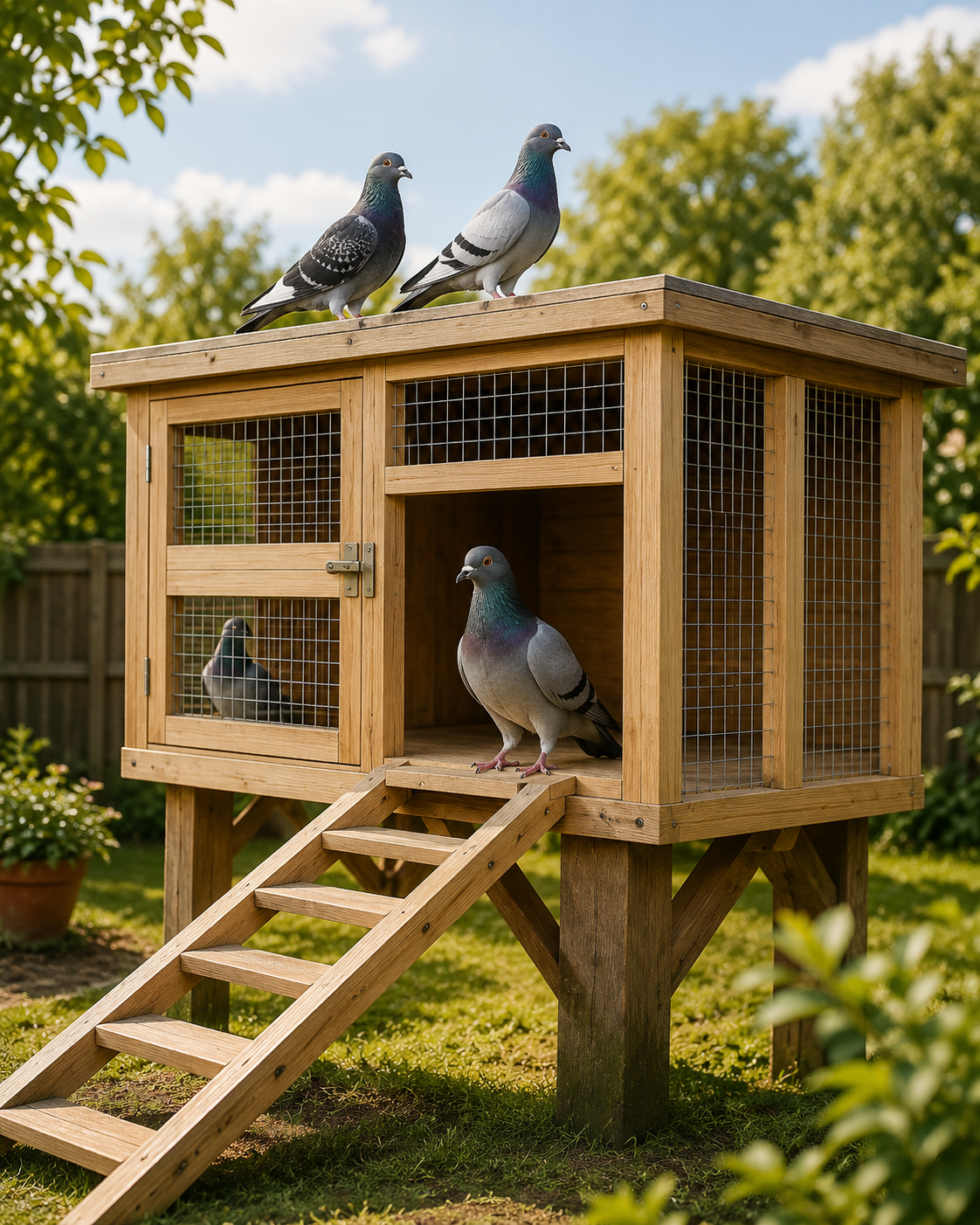
Choose the Right Size
Pigeons need enough space to stand, turn around, stretch their wings, and move between resting and feeding areas. A cage that is too small may cause stress, crowding, and unnecessary competition.
When housing several pigeons, avoid focusing only on how many birds physically fit inside. Consider how much usable floor space, perch space, and nesting space each pigeon will have.
Larger cages and lofts are usually easier to divide into separate areas for:
- Feeding and drinking
- Resting
- Nesting
- Bathing
- Young birds
- Breeding pairs
Prioritize Ventilation
Good airflow helps reduce moisture, odors, dust, and ammonia buildup. However, ventilation should not expose pigeons to strong drafts.
A well-designed pigeon cage should allow fresh air to circulate while still offering protection from cold winds and extreme weather.
For outdoor lofts, place the cage in a dry area protected from direct rain. Avoid locations where water collects around the base.
Look for Easy-Cleaning Features
Cleaning becomes much easier when the cage includes removable trays, grated floors, accessible doors, and smooth surfaces.
Droppings, feathers, spilled feed, and nesting material can quickly accumulate. A cage that is difficult to clean may discourage regular maintenance.
Useful features include:
- Removable waste trays
- Wide access doors
- Detachable feeders
- Raised floors
- Easy-to-clean nesting sections
- Corrosion-resistant materials
Regular cleaning also helps reduce insects, unpleasant odors, and contamination around food and water.
Provide Appropriate Perches
Pigeons generally prefer stable, flat, or slightly angled perching surfaces. Perches should be positioned so birds do not constantly soil one another from above.
Avoid overcrowding the cage with too many accessories. Pigeons should still have clear areas for movement.
Each bird should have access to a comfortable resting location, especially in cages housing multiple pigeons.
Add Proper Nesting Areas
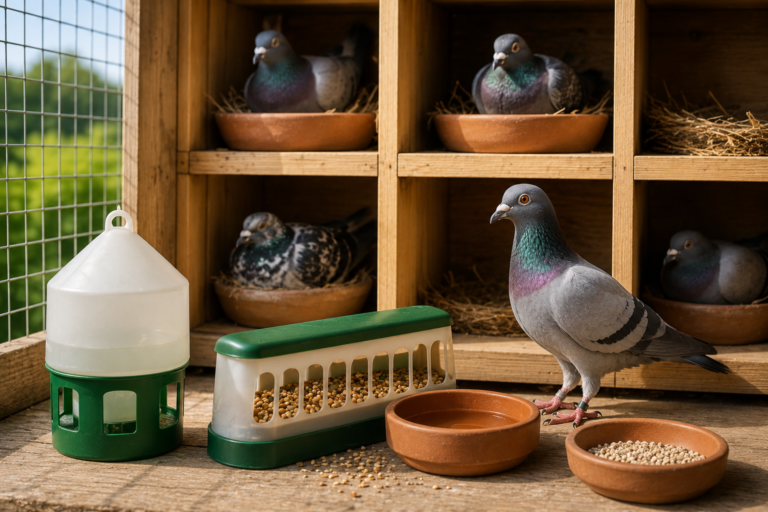
Breeding pigeons need secure nesting spaces where they can rest, lay eggs, and raise young birds.
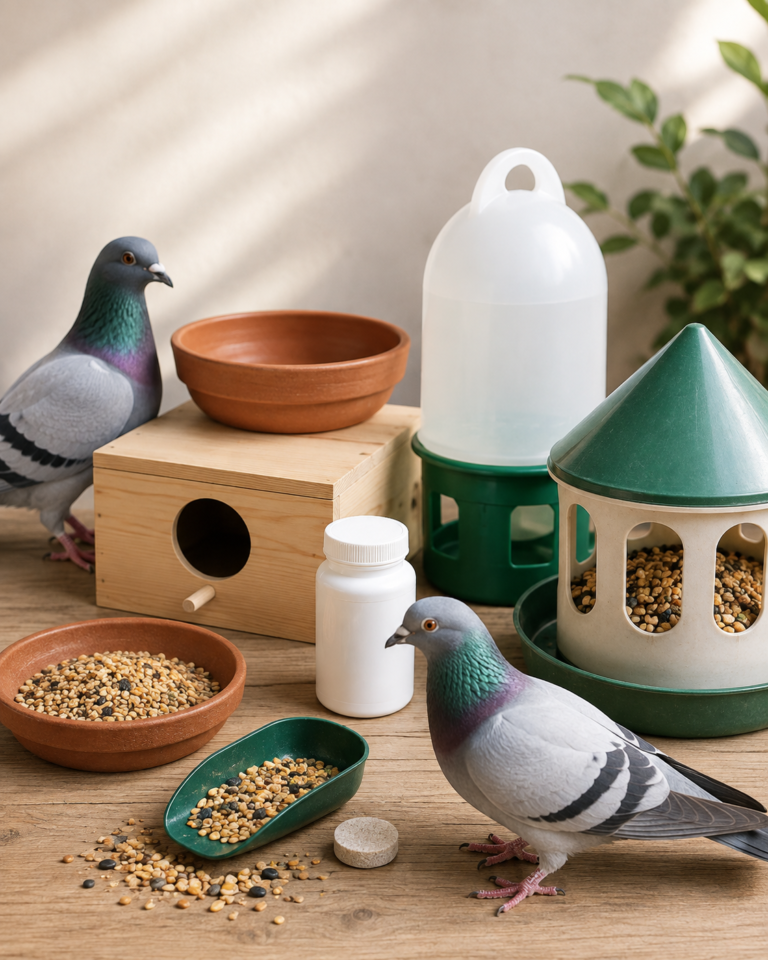
Nesting bowls, wooden nest bases, and separate nest compartments can help keep nesting material contained and provide additional stability.
Place nesting areas away from busy feeding sections whenever possible. This gives breeding pairs a quieter and more protected environment.
Consider Indoor and Outdoor Conditions
Indoor cages should be kept away from kitchen fumes, smoke, chemicals, and extreme temperature changes.
Outdoor cages should provide protection from:
- Rain
- Strong wind
- Excessive heat
- Predators
- Standing water
- Direct afternoon sun
The cage should also be raised slightly above the ground when possible. This helps reduce moisture and improves cleaning access.
Final Thoughts
The best pigeon cage is not simply the largest or most expensive option. It should match the number of pigeons you keep, your available space, your cleaning routine, and your birds’ daily needs.
A comfortable, ventilated, and easy-to-maintain cage creates a better environment for both the pigeons and their owner.
Browse Nova Pet Supply’s selection of pigeon cages, nesting products, feeders, and loft accessories to build a cleaner and more practical setup for your birds.